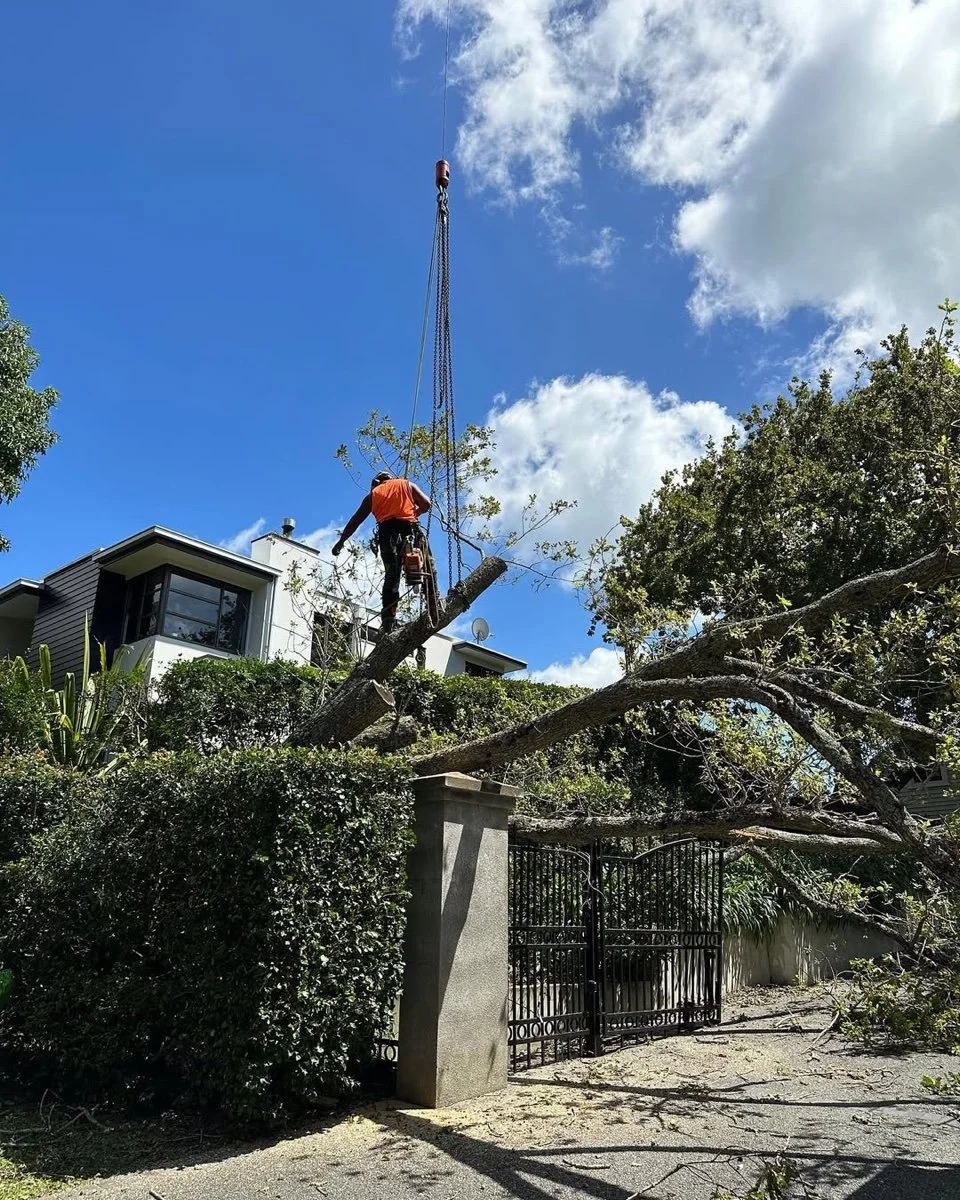
Arborist North Shore Auckland - Professional Tree Care Since 1976

As North Shore's premier arboricultural service provider, Tree Fellas brings certified expertise to maintaining and enhancing the region's urban forest since 1976. Our highly skilled arborist team combines decades of diagnostic experience and deep horticultural knowledge to ensure your trees receive professional care that promotes long-term health and vitality in the North Shore's unique coastal environment.

North Shore Suburbs We Service

Albany, Beach Haven, Birkdale, Birkenhead, Browns Bay, Castor Bay, Devonport, Forrest Hill, Glenfield, Hauraki, Hillcrest, Milford, Northcote, Sunnynook, Takapuna, Torbay, and surrounding areas.

Comprehensive North Shore Arboricultural Solutions

Tree Fellas offers expert arborist services focused on tree health assessment, preservation, and professional consultation:

  • Tree Health Diagnostics: Our ISA-certified arborists identify diseases, pest infestations, and structural weaknesses using advanced assessment techniques and local species knowledge.

  • Professional Arborist Reports: Comprehensive documentation for council applications, insurance claims, property purchases, and development consents meeting all Auckland Council requirements.

  • Preventative Maintenance Programmes: Customised care schedules including seasonal inspections, soil amendments, and proactive treatments to maximise tree lifespan and property value.

Understanding North Shore's Unique Tree Care Challenges

The North Shore presents distinctive arboricultural challenges shaped by its geography, climate, and urban development history. Understanding these regional factors is essential for effective tree management across all suburbs.

Microclimatic Variations Across the Region

North Shore's peninsula geography creates dramatically different growing conditions within just a few kilometres. Eastern suburbs exposed to the Hauraki Gulf experience persistent salt-laden winds and cooler summer temperatures, while western suburbs facing the Waitemata Harbour benefit from greater shelter and warmer microclimates.

These variations affect everything from species selection to pruning schedules and pest susceptibility. Properties on elevated ridgelines from Albany Heights to Forrest Hill face stronger wind loading requiring different structural management than sheltered valley locations. Our arborists assess each site within its specific microclimate context rather than applying generic regional approaches.

Volcanic and Coastal Soil Complexities

Rangitoto's volcanic legacy influences North Shore soils differently across the region. Eastern coastal areas feature sandy, free-draining soils with limited water retention, while western and southern suburbs contain heavier clay components. These soil variations create distinct nutrient availability patterns, drainage challenges, and root development conditions.

Coastal properties face additional soil chemistry challenges from salt deposition, affecting pH levels and nutrient uptake. Trees in these locations require specialized assessment of salt tolerance and may need soil amendments to counteract coastal influences on root health.

Regional Pest and Disease Pressures

North Shore faces specific pest and disease challenges that move across the region following seasonal patterns and wind directions. Coastal pōhutukawa throughout eastern suburbs experience recurring scale insect infestations, particularly following mild winters.

The warm, humid conditions in sheltered western locations increase fungal disease pressure during spring and autumn. Kauri dieback (Phytophthora agathidicida) remains the region's most serious tree disease threat. North Shore contains significant kauri stands in remnant bush areas from Albany to Long Bay, with movement restrictions and rigorous hygiene protocols required for any work near these trees. 

Our arborists maintain current certification in kauri dieback management and follow all required protocols. Myrtle rust affects native species including pōhutukawa, rātā, and ramarama across the region. We monitor for early infection signs and advise on management strategies balancing tree health with broader ecosystem considerations.

Storm Vulnerability and Climate Adaptation

North Shore's exposure to prevailing southwest gales and occasional severe tropical weather systems creates unique structural management requirements. Mature trees planted during the 1950s-70s subdivision boom are now reaching heights where wind loading becomes critical, particularly in exposed locations. 

Changing rainfall patterns affect tree health across the region. Extended summer dry periods stress trees in free-draining coastal soils, while increased winter rainfall creates waterlogging challenges in clay-dominant areas. Our preventative maintenance programmes account for these evolving climate conditions and their long-term impacts on tree structural integrity.

Urban Forest Legacy and Future Planning

North Shore's urban forest reflects distinct development eras. The 1950s-70s subdivision period introduced extensive exotic plantings—liquidambars, eucalyptus, Norfolk pines, and ornamental species—that now dominate mature tree populations.

Many of these specimens are reaching or exceeding their optimal lifespan, requiring proactive assessment for structural integrity and replacement planning. Understanding this historical context allows us to advise property owners on when maintenance remains viable versus when replanting with more suitable species provides better long-term outcomes. We consider both immediate property needs and the regional urban forest's future composition.

Auckland Council Tree Protection Regulations

Navigating Auckland Council's tree protection framework is essential for North Shore property owners. Understanding when consent is required prevents costly compliance issues and project delays.

Protected Tree Categories

Notable Trees (Schedule 10): The Auckland Unitary Plan protects specific significant trees across North Shore based on size, age, botanical value, or historic importance. Any work on scheduled notable trees—including pruning—requires resource consent. Notable tree schedules are property-specific; checking your property's schedule status before planning any tree work is essential. 

Significant Ecological Areas (SEAs): North Shore contains numerous mapped SEAs protecting remnant native bush and ecological corridors. Properties within or adjacent to SEAs face strict vegetation removal controls. Major SEA clusters exist around Long Bay-Okura, Lucas Creek, and scattered bush remnants throughout eastern suburbs. Any work affecting trees within SEA boundaries or buffer zones requires careful assessment of consent requirements. General Tree Protection Provisions: Even trees without specific scheduling receive protection under general rules. Resource consent is typically required for removing or significantly pruning trees meeting these thresholds:

  • Over 6 metres in height on residential properties

  • Over 8 metres in business zones

  • Protected indigenous species (kauri, pōhutukawa, puriri) regardless of size in some zones

Rules vary by zone and overlay. Professional arborist assessment determines whether your specific situation triggers consent requirements.

Resource Consent Process

When tree work requires resource consent, the process typically involves:

  1. Professional Arborist Assessment: Detailed evaluation documenting tree health, structural condition, and justification for proposed work

  2. Application Preparation: Technical reports, site plans, and photographic documentation meeting council requirements

  3. Council Processing: Timeline varies from 10 working days (non-notified) to several months (notified consents requiring neighbour consultation)

  4. Consent Conditions: Approved consents typically include specific work methodologies, timing restrictions, and replanting requirements

Tree Fellas prepares arborist reports meeting Auckland Council's technical requirements and can guide you through consent application processes specific to your North Shore property.

Kauri Protection Protocols

All kauri work requires heightened biosecurity measures. Auckland Council's kauri dieback management approach includes:

  • Mandatory track closures in some regional parks

  • Cleaning station requirements before and after work near kauri

  • Restricted access zones around significant kauri stands

  • Specific consent pathways for any work within 10 metres of kauri root zones

Our team maintains current training in kauri dieback protocols and possesses required hygiene equipment for compliant kauri management.

Vegetation Clearing and Development

Property development, subdivision, or building consent often triggers additional tree protection provisions:

  • Site coverage rules may limit vegetation clearing extent

  • Earthworks near trees require root protection zones

  • Replanting obligations may apply for removed trees

  • Heritage and character overlay areas face additional restrictions

Understanding these requirements during planning stages prevents project complications and consent delays.

Why Choose a North Shore Specialist Arborist

Effective tree care requires deep understanding of regional conditions, species performance, and local regulatory frameworks. Tree Fellas' 45+ years serving North Shore provides unmatched regional expertise across all suburbs and tree care scenarios.

Comprehensive Regional Species Knowledge

North Shore's diverse tree population includes both native and exotic species requiring specialized management approaches. Our arborists work extensively with: Coastal Natives: Pōhutukawa structural management, scale insect control, salt tolerance optimisation, and flowering promotion techniques specific to North Shore's varying coastal exposures from sheltered harbour beaches to exposed Hauraki Gulf shorelines. Remnant Forest Species: Kahikatea, tōtara, mataī, and puriri preservation in properties adjacent to bush reserves. 

We understand these species' growth patterns, conservation significance, and appropriate management balancing property safety with ecological value. Exotic Mature Specimens: The region's 1950s-70s development legacy means extensive work with aging liquidambars, eucalyptus, Norfolk Island pines, macrocarpas, and ornamental species. We assess structural integrity in these specimens approaching or exceeding typical lifespans. Problem Species Management: Bamboo control, privet removal, and management of invasive species threatening native regeneration, particularly in suburbs adjacent to ecological reserves. 

This species-specific expertise allows us to provide tailored recommendations based on each tree's biological requirements within North Shore's environmental context rather than generic management approaches.

Cross-Suburb Comparative Knowledge

Managing trees across all North Shore suburbs provides perspective impossible to gain from single-suburb experience. This comparative knowledge informs better decision-making for your specific location. When recommending replacement species, we draw on decades of observing which trees thrive in conditions matching your property across hundreds of other North Shore sites.

Auckland Council Relationship and Consent Expertise

Our extensive history working with Auckland Council's North Shore planning teams means we understand local processing expectations, preferred report formats, and consent pathway nuances. This expertise expedites consent processes and increases approval likelihood for work requiring resource consent. We prepare arborist reports that satisfy council's technical requirements while clearly communicating justifications in language planning officers expect. This professional documentation quality often makes the difference between straightforward consent approval and problematic application processing.

Multi-Property and Regional Project Capability

Beyond individual residential work, Tree Fellas manages large-scale projects across multiple North Shore properties:

  • Body corporate tree management for apartment complexes and retirement villages

  • Storm damage response coordinated across numerous suburbs simultaneously

  • Development site vegetation management for subdivision and commercial projects

  • School and council facility grounds maintenance programmes

This regional operational capacity means we can scale services to your needs whether you're a homeowner with a single tree concern or a property manager overseeing trees across multiple North Shore sites.

Partner with North Shore's Premier Arborist

When you choose Tree Fellas as your arborist, North Shore property owners gain access to unmatched professional expertise and personalised service. We develop long-term tree management strategies tailored to your property's specific needs, providing ongoing consultation and proactive care recommendations.

Our arborist experts are available for professional consultations, detailed health assessments, and expert second opinions. Whether you need an arborist report for council, diagnosis of tree problems, or strategic preservation planning, we deliver solutions based on scientific best practices and regional expertise. Contact us today by requesting a professional arborist consultation or calling us at 0508 TREEFELLAS (0508 873 3335) to schedule your tree health assessment.

Protect your valuable trees with North Shore's most trusted arboricultural experts.

BOOK YOUR ARBORIST ASSESSMENT TODAY